
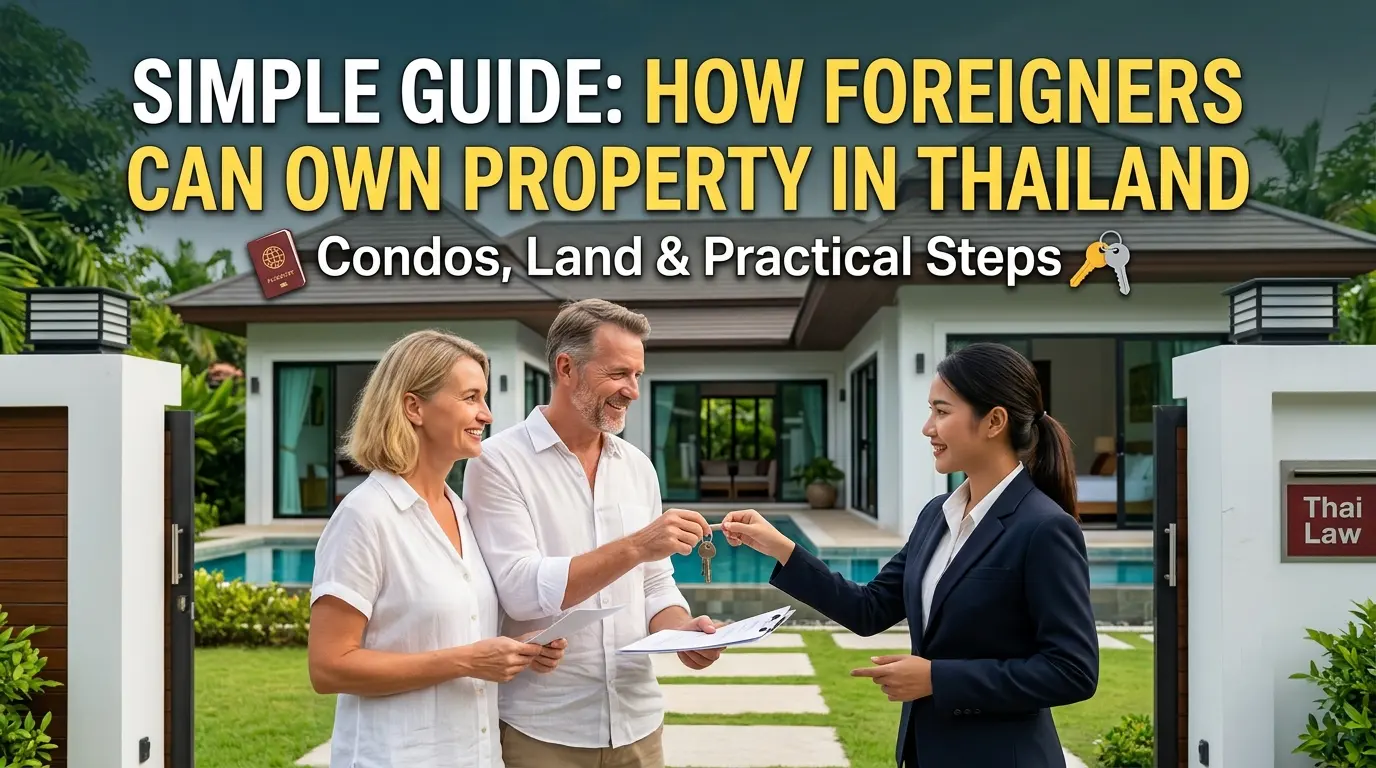
Thailand remains a top destination for foreigners, whether for retirement, tourism, or investment. However, when it comes to "buying property," Thai laws are strict and have a unique structure that foreign buyers must understand in detail.
Here are the current legal pathways and conditions that allow foreigners to legally possess property in Thailand.
1. Condominiums — The Easiest and Safest Route
Purchasing a condominium with a Freehold (absolute ownership) title is the most straightforward, direct, and safest method for foreigners. Under the Thai Condominium Act, foreigners can hold ownership in their own name under two key conditions:
The Foreign Quota Rule (49%)
Foreigners can collectively own no more than 49% of the total sellable area of any given condominium building (the remaining 51% must be owned by Thai nationals). If this quota is full, foreigners can only purchase units under a long-term leasehold contract.
Foreign Fund Transfer (FET Form)
The funds used to purchase the condominium must be transferred into Thailand in foreign currency. Buyers must obtain a Foreign Exchange Transaction (FET) form (formerly known as Thor.Tor.3) from the receiving Thai bank to present to the Land Department during the ownership transfer.
2. Landed Property (Houses & Villas) — Possession Without Land Ownership
Under the Thai Land Code, foreigners cannot own the freehold title of land in their own name as individuals. However, if you wish to possess a single-detached house, townhouse, or pool villa, there are structured legal workarounds:
Long-Term Leaseholds
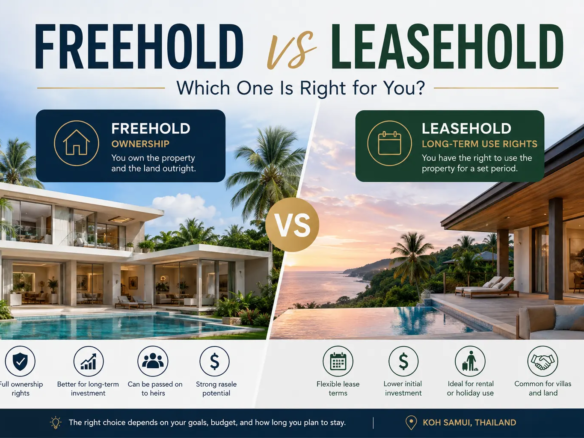
This is the most widely accepted and legally secure method. Foreigners can enter into a long-term land lease agreement for a maximum of 30 years, which must be officially registered at the local Land Office.
Key Takeaway: While contracts often include renewal clauses (such as 30+30+30 years), Thai law only explicitly guarantees protection for the first 30 years. Having a highly secure contract drafted by an experienced real estate lawyer is crucial to safeguarding future renewal options.
Separating "House Ownership" from "Land Ownership"
While foreigners cannot own the land, they can legally own 100% of the building or structure built on that land. The common structure for this is:
- Leasing the land under a 30-year long-term contract.
- Registering the ownership of the building/villa in the foreigner’s own name.
3. Alternative Legal Rights and Pathways
Beyond buying condominiums and long-term leases, there are other legal mechanisms that facilitate long-term residency and property use:
Superficies and Usufruct Rights
These are real rights registered on the land title deed (Chanote). They grant a foreigner the right to use, occupy, or benefit from the land or building for their lifetime or for a specified period (up to 30 years). These options are highly popular among foreign-Thai married couples.
Investment via Government Policies (BOI or Large Investments)
Foreigners who invest in businesses promoted by the Board of Investment (BOI), or who invest a minimum of 40 million Baht in specified Thai assets or government bonds, may be granted permission to own up to 1 Rai (approx. 1,600 sqm) of land for residential purposes. This requires case-by-case approval from the Ministry of Interior.
Important Precautions Before Deciding to Buy
Conducting thorough Due Diligence is the most critical step. This includes verifying that the condominium's foreign quota is actually available, ensuring the land title deed is free of encumbrances, and checking the developer's track record. Consulting a qualified real estate lawyer in Thailand is the best way to prevent legal and financial risks.

Join The Discussion